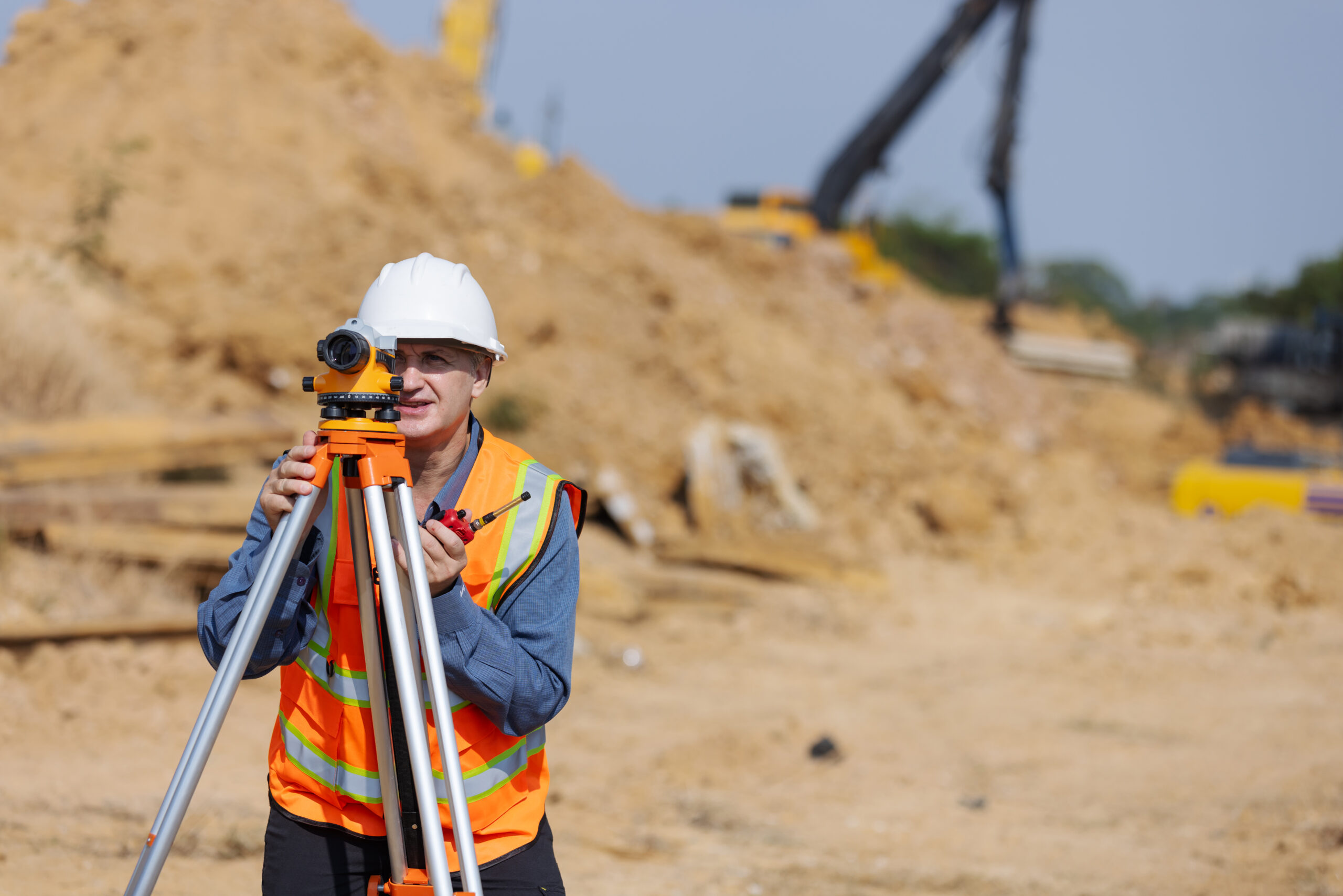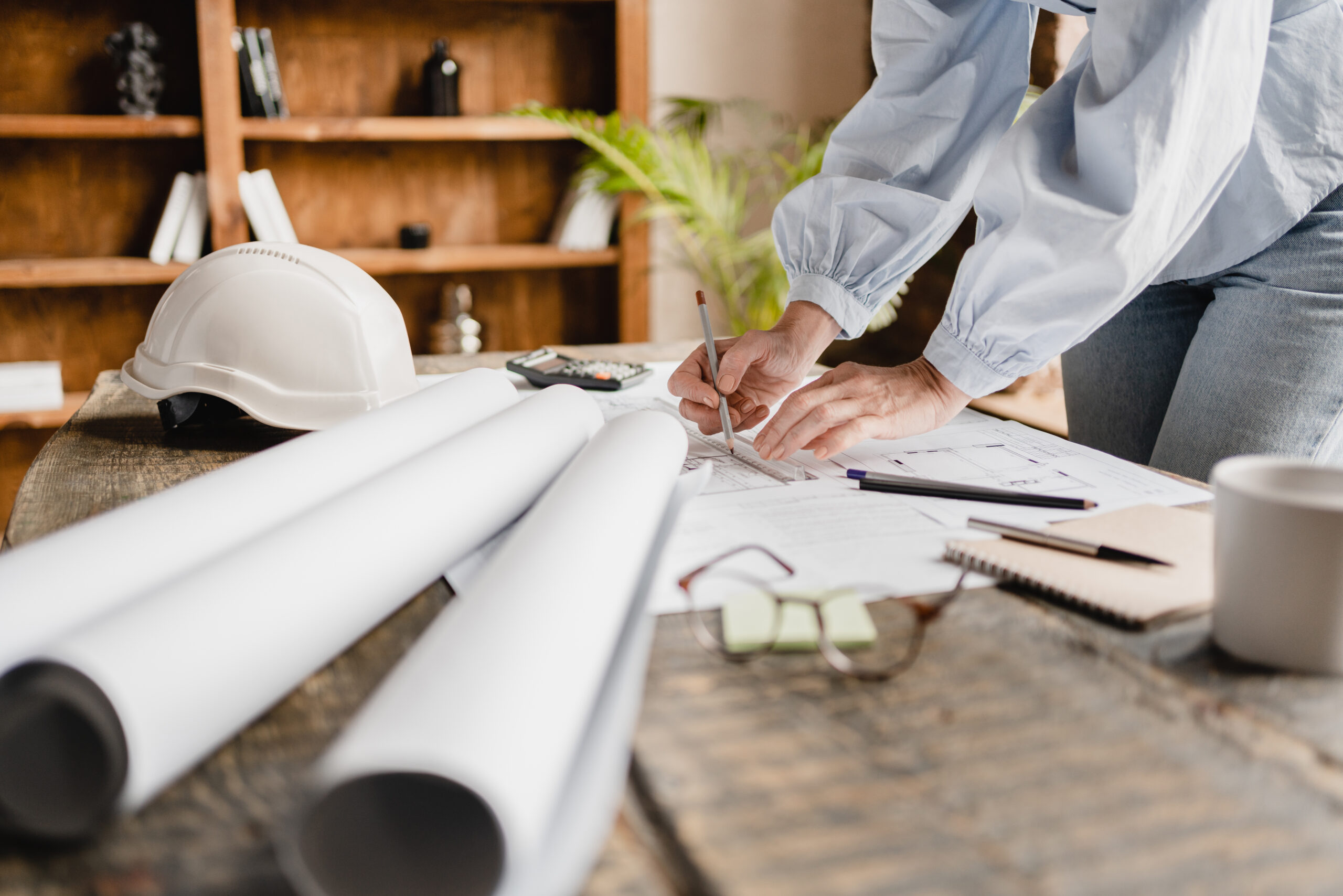
When it comes to construction, there’s a lot to juggle: budgets, planning, permits, and design decisions. But there is one often overlooked step that can make or break your project before you even lay a single brick: the building set out survey.
This is a crucial first step that transfers your architectural plans from paper onto the actual land, marking exactly where your structure should stand. During a set out survey, a licenced surveyor (like us) carefully measures and marks key structural points, i.e corners, walls, foundations, ensuring your building is positioned correctly, sized accurately, and levelled precisely.
Skipping or delaying this step can be costly. Many property owners and builders make the mistake of overlooking a set-out survey until construction is underway, or worse, after it’s finished, risking errors that could lead to delays, extra expenses, or even legal headaches.
In this post, we’ll break down everything you need to know about building set out surveys in Australia, why they matter, and how they help your project start on the right foot.
Key Takeaways
- Critical First Step in Construction: A building set out survey transfers architectural plans from paper onto the actual site, marking exact positions for walls, foundations, and structural elements.
- Ensures Legal Compliance: Conducted by a licensed surveyor, the survey confirms your project stays within property boundaries, respects setbacks, and provides legally defensible documentation.
- Prevents Costly Errors: Accurate set out reduces risks of misaligned walls, uneven floors, misplaced services, or boundary encroachments, saving time, money, and potential legal issues.
- Required for Certification: For most new builds or modifications, a set out survey supports final inspections and the issuance of Form 12 certificates, necessary for occupancy permits.
- Essential for All Project Types: From residential homes and extensions to commercial developments, high-rise buildings, roads, bridges, and infrastructure projects, set out surveys ensure accuracy at every stage.
- Different from Standard Surveys: While land surveys map boundaries and elevations, set out surveys specifically translate approved designs into precise points on the ground to guide construction.
- Step-by-Step Process: Professional surveys involve plan review, pre-survey calculations, use of tools like total stations and GPS, on-site marking, compliance checks, and integration with project plans.
- Choosing the Right Surveyor Matters: Licensing, experience, technology use, local knowledge, and clear communication are key when selecting a surveyor to ensure precision and regulatory compliance.
- Mitigates Legal and Financial Risks: Skipping a set-out survey can result in encroachment, regulatory violations, structural errors, project delays, insurance complications, and expensive rework.
- Peace of Mind for Builders and Owners: Investing in a set-out survey is a small upfront cost that protects your project, ensures accurate construction, and provides confidence from start to finish.
What is a Building Set Out Survey?
Simply, a building set out survey is a bridge between your architectural plans and the physical construction of your project. “Setting out” refers to transferring the positions and measurements from design drawings onto the actual site.
Every corner, wall, foundation, and key marker is measured and marked to ensure the building is constructed in the right location and at the correct size. Precision is essential here; minor errors during set out can lead to misaligned walls, uneven floors, or misplaced structures, often resulting in costly rework and delays.
In essence, it creates a to-scale guide on the ground that contractors can follow to build safely, accurately, and in compliance with regulations.
How Set Out Differs from Other Surveys
While set out surveys and traditional land surveys both rely on accurate measurement, they serve different purposes.
Standard boundary surveys map land features, boundaries, and elevations, providing essential data about the site. Set out surveys, on the other hand, translate completed designs into physical points on the ground, guiding the actual construction.
A surveyor’s work may include boundary determination and post-construction verification, whereas a set-out engineer focuses specifically on construction placement.
Do All Construction Projects Need a Set Out Survey?
Set out surveys are essential for any new development where precise placement is required. This typically includes:
- New structures: Homes, garages, pools, or sheds
- Additions and extensions: Decks, home extensions, or renovations
- Large-scale projects: Commercial buildings, roads, bridges, and tunnels
- Infrastructure projects: Solar farms, drainage, sewerage, and waterline installations
- Projects with strict boundaries: Fences, retaining walls, or other site-specific constructions
For large or complex projects, multiple set-out surveys may be conducted at different stages to ensure accuracy throughout the construction process.
Legal Requirements and Regulations
Beyond accuracy, set out surveys help ensure compliance with legal boundaries and local council requirements.
In many regions, engaging a Registered Cadastral Surveyor is mandatory, particularly for certification and approval purposes. Regulations can vary depending on project type, scope, and location, so adhering to environmental standards, zoning restrictions, and council stipulations is crucial to avoid legal complications down the line.
Why a Set Out Survey is Essential Before Building
Ensures Legal Boundary Compliance
When a licensed surveyor conducts your set-out survey, you gain a legally defensible position for your property boundaries. Even minor discrepancies can trigger disputes or legal action, particularly if errors exceed allowable margins under property law. A professional survey guarantees that your structure remains within legal limits, respects required setbacks, and provides documented evidence in case of boundary conflicts.
Helps Avoid Costly Construction Errors
Catching errors early also saves substantial time and money. Studies show that rework can eat up 12–15% of project costs and extend schedules by up to 20%. Common issues a proper set-out survey prevents include:
- Footings poured in the wrong positions
- Encroachment onto neighbouring land
- Misplaced services or utility strikes
- Lost or misaligned floor area
Supports Accurate Placement of Structures
Even small measurement inaccuracies can escalate into major structural problems. A few centimetres off during set out may result in:
- Bowed or uneven walls
- Sticky doors and misaligned windows
- Uneven floors or mispositioned services
A precise set out ensures loads are correctly distributed, structural elements align perfectly, and future issues are minimised.
Required for Final Inspection and Certification
For most new or modified homes, a Form 12 certificate is required as part of the final inspection process. This confirms your building complies with approved plans and property boundaries. Without proper certification, councils may withhold occupancy permits or certificates of final inspection, delaying handover and adding unnecessary stress.
The Risks of Skipping a Set Out Survey
Skipping a set-out survey may seem like a way to save costs upfront, but the risks are significant:
- Building Misalignment & Encroachment: Structures may end up partially or wholly on neighbouring land or public easements, potentially requiring demolition and rebuilding.
- Legal and Regulatory Non-Compliance: Non-compliant construction can violate zoning, height, or setback regulations, triggering fines or enforcement actions.
- Financial Liabilities: Costs can include legal fees, fines, wasted materials and labour, insurance complications, and rectification expenses.
- Project Delays: Boundary disputes, undiscovered underground utilities, or structural errors can halt construction, causing costly schedule disruptions.
- Structural and Design Errors: Misaligned walls, incorrect dimensions, and other mistakes compromise build quality and safety.
- Insurance Complications: Non-compliant structures may not be covered by insurance, leaving owners personally liable for damages.
At Level Up Surveying, we provide accurate, reliable data to guide smart decisions and deliver real results. From residential homes to large-scale commercial projects, our construction surveying solutions help you avoid construction errors, ensure compliance, and keep your project moving smoothly from start to finish.

How a Building Set Out Survey is Done
Executing a building set-out survey is a precise, methodical process. Professional surveyors transform your architectural plans into accurate ground markings that guide construction teams, ensuring your project is built in exactly the right place.
1. Pre-Survey Preparation and Plan Review
Before heading to the site, surveyors conduct detailed consultations to understand your project scope and specific requirements. This stage involves reviewing approved building plans, examining property boundaries, and assessing site conditions. Surveyors perform detailed calculations and compute set-out data to anticipate challenges, such as existing structures, uneven terrain, or other obstacles, ensuring a smooth field operation.
2. Use of Total Stations and Other Tools
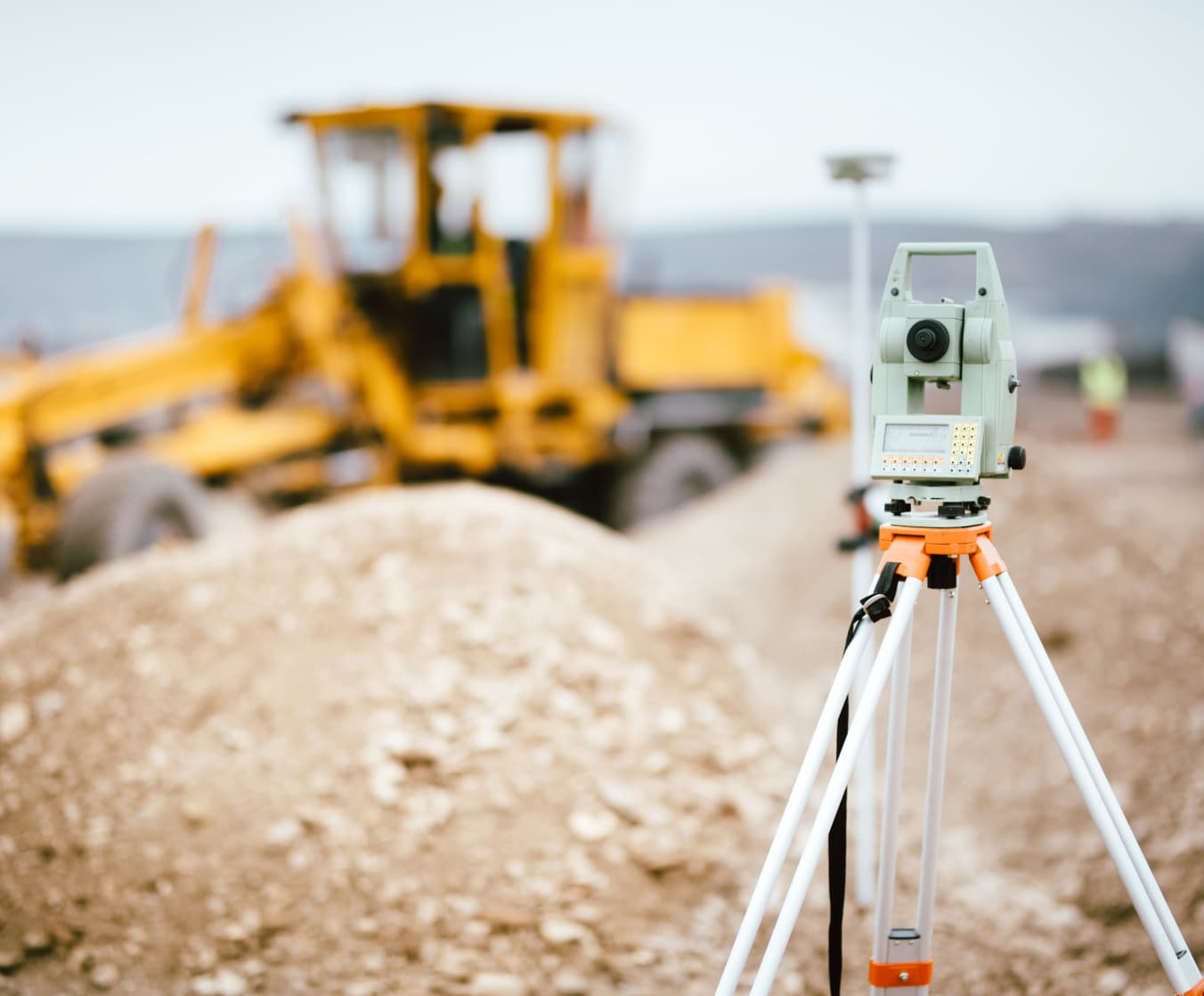
Modern set out surveys relies on advanced equipment to achieve pinpoint accuracy. Total stations, combining theodolites with electronic distance meters, provide angular and distance measurements accurate to within 5–10mm per kilometre. Depending on the site, surveyors may also use GPS devices, drones with LiDAR capabilities, and laser scanners, ensuring that every measurement aligns perfectly with your plans.
3. Marking Key Points on the Site
Once on-site, surveyors establish control points that act as reference markers for all subsequent measurements. Using these points, they mark key structural elements, walls, columns, foundations, and gridlines on the ground with stakes, pegs, or spray paint. For larger projects, multiple surveys may be conducted as construction progresses to maintain accuracy at each stage.
4. Issuing Form 12 and Compliance Checks
After completing the survey, a Form 12 certification is issued to verify that the structure’s placement complies with approved plans, property boundaries, and setback requirements. This legal document is typically required for final inspection. If any discrepancies are detected, surveyors provide detailed sketches and instructions for rectification, ensuring full compliance with regulations.
5. File and Plan Integration
To keep your project coordinated, surveyors provide survey files and plans in formats that integrate seamlessly into your workflows. Whether it’s CAD-ready files, site plans, or digital reports, the data delivered supports smooth collaboration between builders, engineers, and project managers.
Choosing the Right Surveyor for Your Set Out Survey
Beyond the survey, selecting the right surveyor is just as crucial to ensure your construction project starts on the right foot. A skilled, licensed professional not only guarantees accurate measurements but also helps you avoid costly mistakes, delays, and legal complications.
- Look for Licensing and Accreditation: In Australia, only licensed or registered surveyors are qualified to conduct building set-out surveys. Check that your surveyor is accredited with the relevant state or territory surveying board. Licensing ensures they meet strict professional standards and are legally recognised to provide survey certifications.
- Experience Matters: Different projects have different challenges. Choose a surveyor with experience relevant to your project type. An experienced surveyor understands local council requirements, potential site complications, and the best practices for precise set out across varying terrains.
- Check Technology and Methods: Modern surveying relies on tools like total stations, GPS, drones, and laser scanning. Ask your surveyor about the technology they use and how it contributes to accuracy and efficiency. A surveyor equipped with modern tools is better prepared to handle complex projects and deliver precise results.
- Transparency and Communication: A good surveyor should clearly explain the process, timeline, and costs upfront. They should be willing to answer questions about potential challenges, legal requirements, and how their work integrates with your builders and engineers. Open communication helps prevent misunderstandings and ensures the survey aligns with your project goals.
- Reviews and References: Check reviews, case studies, or ask for references from previous clients. Positive feedback from similar projects can provide confidence in their expertise and reliability.
- Local Knowledge is a Bonus: Surveyors familiar with local council regulations, zoning rules, and environmental considerations can save you time and reduce compliance risks. They’re also more likely to anticipate common site issues that could impact construction accuracy.
At LevelUp Surveying, we combine licensed expertise, modern technology, and local knowledge to provide accurate, reliable set-out surveys. From small residential builds to large-scale commercial projects, we ensure your construction starts precisely where it should, avoiding costly mistakes and keeping your project on track.
Set Your Project Up for Success
Building set out surveys are the cornerstone of every successful construction project, no matter the size or scope. While the investment might seem significant, it’s a small price to pay compared with the potential costs of boundary disputes, construction errors, or even partial demolition.
Skipping a proper set-out survey exposes you to legal risks, costly rework, and the possibility of denied occupancy permits. Even minor mistakes early on can escalate into major structural problems that require extensive repairs, delaying your project and inflating costs.
Ready to Start Your Project with Confidence?
Don’t risk costly mistakes or legal complications; ensure your construction begins on the right footing. Contact Level Up Surveying today to book your professional building set-out survey and give your project the precision and protection it deserves.